Golden Hour Wedding Photos: How to Plan for the Best Light

Weddings · 9 min read · By Kaushik Bathia · Updated 2026-06-22

Bespoke packages · fast response · free consultation

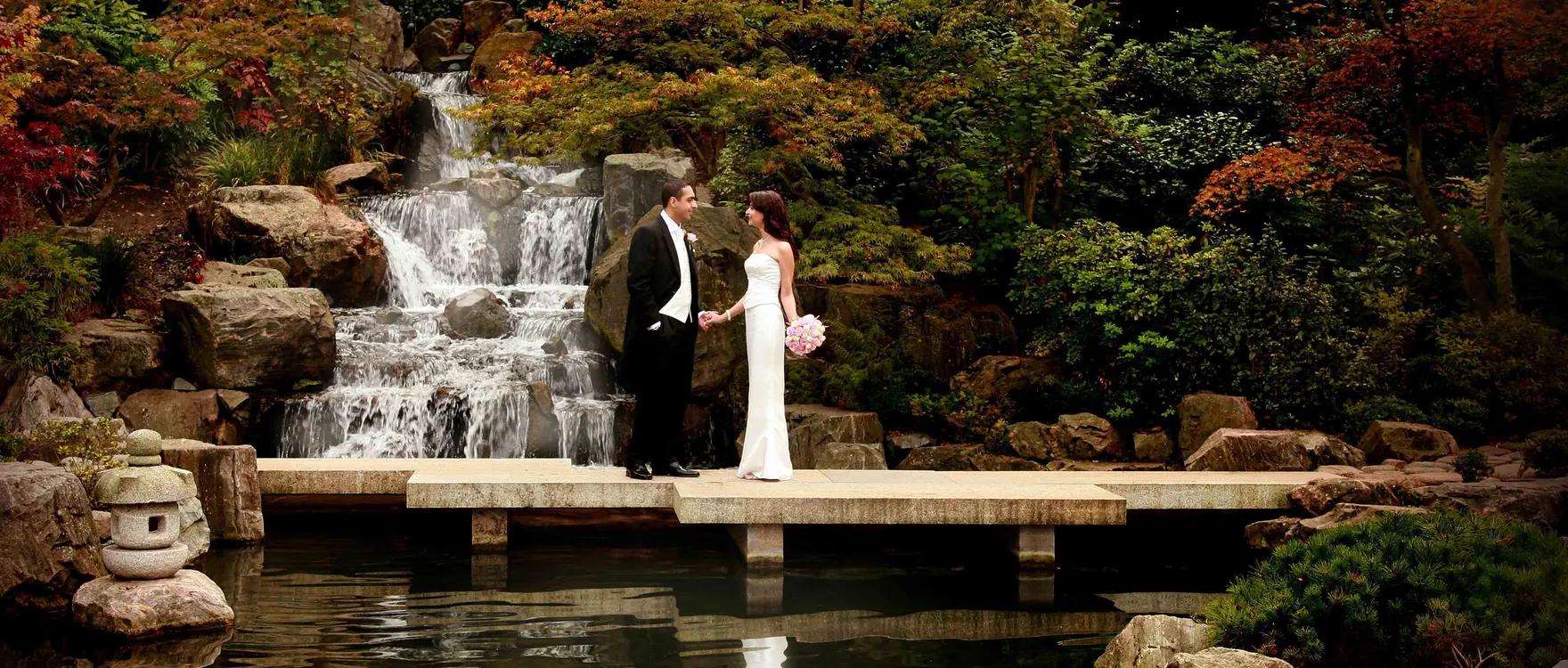
Couple photographed at golden hour on their wedding day

Key takeaways

  • Golden hour is roughly the first hour after sunrise and the last hour before sunset, when light is soft and warm.
  • Stealing just 10-15 minutes at golden hour produces some of the most romantic portraits of the day.
  • In London, sunset swings from about 21:20 in midsummer to roughly 15:55 in midwinter, so timing depends heavily on the season.
  • The golden-hour window itself lasts longer at UK latitudes than nearer the equator, because the sun sets at a shallow angle.
  • Build golden hour into your timeline in advance, pick a spot with a clear western horizon, and keep a weather backup plan.

Golden hour, the period just after sunrise and before sunset, gives the softest, warmest and most flattering light of the entire day. Setting aside even ten to fifteen minutes for portraits then produces some of the most romantic images of a wedding. The catch is timing: it has to be planned into your schedule before the day, because golden hour will not wait. Here is how to make the most of it.

What is golden hour and why does it matter?

Golden hour is the period shortly after sunrise and before sunset during which daylight is redder and softer than when the sun is higher in the sky, as defined by Wikipedia. When the sun sits low, its light travels through more of the atmosphere, which scatters the shorter blue wavelengths and leaves the warm reds, oranges and yellows we associate with the look.

For portraits it is ideal. As timeanddate.com notes, the lower contrast means shadows are less harsh and highlights are less likely to blow out, so skin is flattered and scenes gain a gentle glow that harsh midday sun cannot match. It is the light photographers plan their day around.

One quiet advantage of getting married in Britain is that golden hour lasts longer here than it would in, say, southern Spain. Because London sits at around 51.5 degrees north, the sun drops toward the horizon at a shallow angle rather than plunging straight down, which stretches the low-light window. timeanddate.com notes that golden hour lasts longer the further you are from the equator, so a UK couple often has a more generous run of warm light to work with than they might expect.

Do not pack up the moment the sun disappears, either. Golden hour is followed by blue hour, the roughly 20 to 30 minutes after sunset when the sky turns a deep cobalt and any lit windows, festoon lights or candles start to glow. As timeanddate.com explains, this soft, even light is wonderful for a final couple portrait against an illuminated venue, so we often shoot straight through from gold into blue.

When is golden hour in the UK?

Because golden hour depends on sunset, it shifts dramatically with the season. London enjoys 16 hours 42 minutes of daylight at the June solstice but only 7 hours 53 minutes at the December solstice, per timeanddate.com, so sunset ranges from around 21:20 in late June to roughly 15:55 in late December. A summer wedding might step out for golden-hour portraits after 8:30pm, while a winter wedding needs them mid-afternoon.

Approximate London sunset time by month (local time)JanFebMarAprMayJunJulAugSepOctNovDec16:3017:2018:1020:0020:4521:2021:0020:1019:0017:5016:2015:55
Approximate London sunset time by month (local time). Approximate local sunset, London. Source: timeanddate.com.

One thing that catches couples out is the clock change. British Summer Time runs from the last Sunday in March to the last Sunday in October, when clocks go back an hour, per GOV.UK. A wedding in the third week of October enjoys sunset around 18:00, but move it a fortnight past the change and the sun is gone by roughly 16:30. Always check your venue's sunset time for your exact date and plan backwards from it.

Golden hour season by season in the UK

The best strategy for golden-hour portraits changes with the time of year. In summer the light comes late and lingers; in winter it arrives during the meal and vanishes fast. Knowing roughly when your window falls lets you slot it into the timeline without disrupting the celebration. Spring (March to May). Sunset moves quickly from about 18:10 in early March to past 20:45 by late May. Blossom, fresh green and long, gentle light make this a lovely season for portraits, and the golden window usually falls comfortably after the wedding breakfast. See our notes on spring wedding photography for more on the season. Summer (June to August). With sunset as late as 21:20 in June, golden hour arrives well into the evening, often mid-reception. That is a gift for light but a challenge for timing, since guests are dancing by then. We usually pull the couple away for ten minutes between courses or just as the band starts. Our summer wedding season checklist covers the wider timeline.

Autumn (September to November). Arguably the sweet spot. Sunset drifts from 19:00 in early September to 16:20 by mid-November, so golden hour lands neatly in the late afternoon, and the low sun plus turning leaves give the warmest tones of the year. Confetti and backlit foliage photograph beautifully.

Winter (December to February). The sun sets as early as 15:55 in late December, often before the speeches finish, so a winter golden-hour slot has to be booked into the early afternoon or skipped in favour of indoor and blue-hour portraits. Our guide to winter wedding photography explains how we work with the short days.

How to build it into your wedding timeline

The simplest approach is to pause the reception for ten to fifteen minutes near sunset and slip away for a few couple portraits. Tell your photographer and your coordinator in advance so it is written into the timeline; without that, the moment is easily lost in the flow of the day. It is a tiny interruption for some of your favourite photographs. Here is how a summer golden-hour slot tends to sit within an evening. Say sunset is 21:10. We would aim to step outside at roughly 20:40, giving thirty minutes that carries us through the warmest gold and into the first of the blue hour. That usually means slipping away just as the band finishes their first set or between the main course and dessert, when nobody misses the couple for a few minutes. Your toastmaster or coordinator can quietly hold the next moment, the cake cut or the first dance, until you are back.
A few practical points make the slot run smoothly. Keep it to the two of you or, at most, one small group; golden hour is too short to work through a full family list. Let your photographer scout the spot earlier in the day so no time is lost searching for it. And build in a five-minute buffer, because sunset does not wait and traffic between the marquee and the best backdrop always takes longer than you think. If you want to relax in front of the camera beforehand, an engagement shoot is the best rehearsal there is.

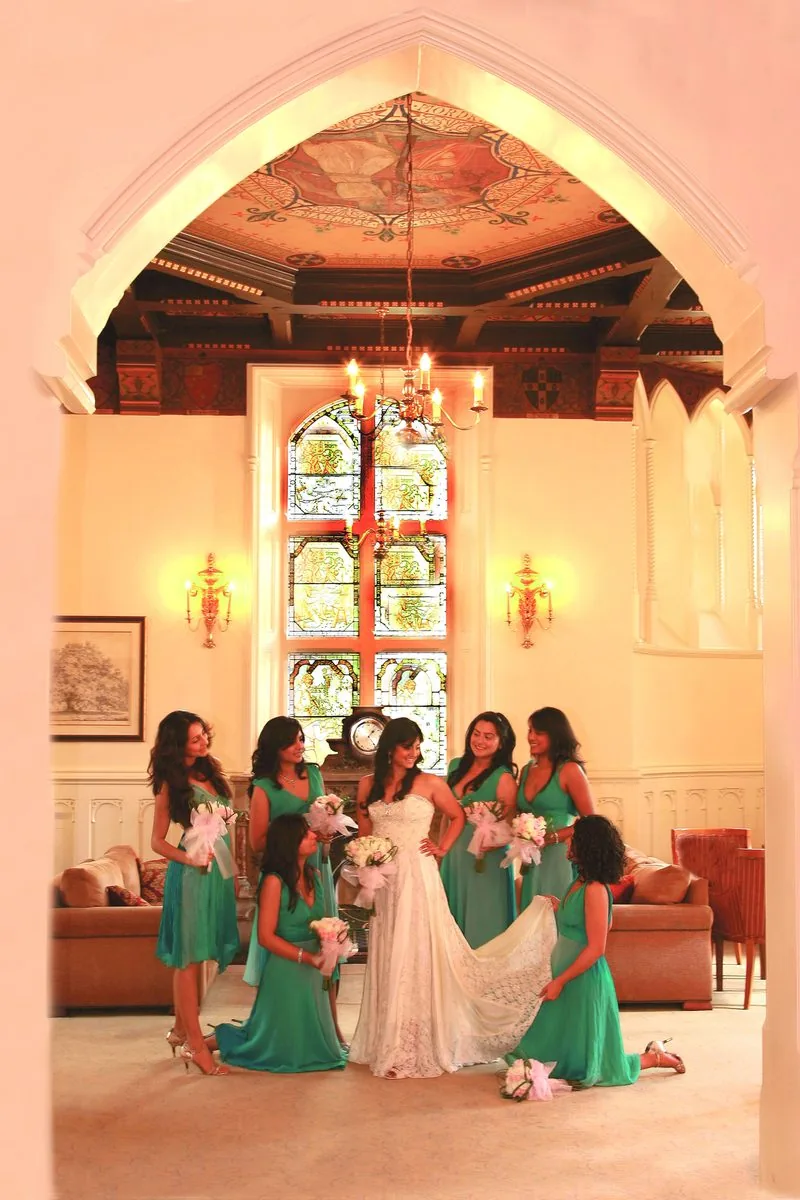
Couple portrait in warm evening light at a wedding
A planned 10-15 minute pause near sunset yields the warmest portraits of the day.

What if the weather does not cooperate?

Cloud is not the enemy it seems, an overcast sky acts like a giant softbox and still produces beautiful, even light. For rain, a covered colonnade, a doorway or a window indoors can stand in for golden hour. A good photographer always has a backup plan, so a grey forecast is no reason to worry.

Some of our favourite images have come from couples who braved a drizzle for five minutes under an umbrella, the wet light and reflections add atmosphere you simply cannot plan for.

Choosing the right spot at your venue

The single most useful thing you can do for golden hour is pick a spot with a clear view toward the western horizon, so low sun can reach you rather than being blocked by the building or a treeline. A lawn edge, a walled garden, a lakeside or an open field beats a courtyard hemmed in on all sides. Backlight, with the sun behind you, gives the halo of rim light most couples picture when they think of golden hour.

Across London and the Home Counties we photograph at venues that handle evening light well. The parkland and lake at Moor Park and the grounds around Northwood and Rickmansworth catch a lovely low sun, and larger estate venues in Hertfordshire and Buckinghamshire tend to have open western aspects and mature trees to shoot through. For couples marrying in central London, the terraces and river frontage along the Thames come alive at blue hour once the city lights switch on. Wherever you are, we scout the best angle on arrival. Our guide to pre-wedding shoot locations in London lists spots we return to again and again.

Common golden-hour mistakes to avoid

Most golden-hour disappointments come down to timing and planning rather than weather. A little foresight avoids nearly all of them, and none of these fixes costs anything. Leaving it off the timeline. The commonest mistake by far. If the slot is not written down and agreed with your coordinator, the evening runs away and the light is gone. Ten minutes reserved in advance is all it takes. Ignoring the clock change and the season. Couples plan a late golden-hour break for an October wedding, forgetting the clocks have gone back and the sun now sets before the speeches finish. Check your exact sunset time. Choosing an enclosed backdrop. A pretty courtyard with high walls to the west can be in shadow while the field next door glows. Pick an open aspect, and think about where the sun actually sets, not just which corner looks nice at midday.

Trying to include everyone. Golden hour is for couple portraits, not the full group-shot list. Do the family and group photographs earlier, in open shade after the ceremony, and keep the golden window for the two of you. If natural posing worries you, our notes on natural wedding poses will help you feel at ease.

Beautiful light is mostly a matter of planning. Tell us your venue and date and we will work golden hour into your timeline so you come away with portraits you will treasure.

About the author. Kaushik Bathia has photographed more than 1,000 weddings and celebrations over 25 years, based in London, with a specialism in Asian weddings across London and the UK.

Related: Asian wedding photography, wedding day planning checklist, our gallery, get in touch.

Good to know

Frequently asked questions

Usually just 10 to 15 minutes. It is a short, relaxed break from the reception, but it yields some of the most memorable portraits of the day.

It depends on your date and location. In London it falls in the hour before sunset, which ranges from about 21:20 in midsummer to 15:55 in midwinter, so we plan it around your venue's sunset time.

Yes. Overcast light is soft and flattering, and we use covered spaces, doorways and windows for portraits when needed. Wet weather often produces atmospheric, unexpected images.

Absolutely. Building a short golden-hour slot into your schedule in advance is the single best way to guarantee those warm, romantic couple portraits.

Yes. Even within a busy multi-event day, a brief pause near sunset gives beautiful couple portraits to complement the colour and energy of the celebrations.

Blue hour is the 20 to 30 minutes after sunset when the sky turns deep cobalt and venue lights start to glow. It gives soft, even light and dramatic portraits against an illuminated building, so we often shoot straight through from golden hour into blue hour.

Just tell us your venue and date and we will check the sunset time and build the slot into your timeline. It only needs 10 to 15 minutes, but agreeing it in advance with your coordinator is what guarantees it actually happens on the day.

Based in London

Want portraits in beautiful light?

Tell us about your day and we'll plan the timeline so the light works in your favour.

No obligation. We respect your privacy.